
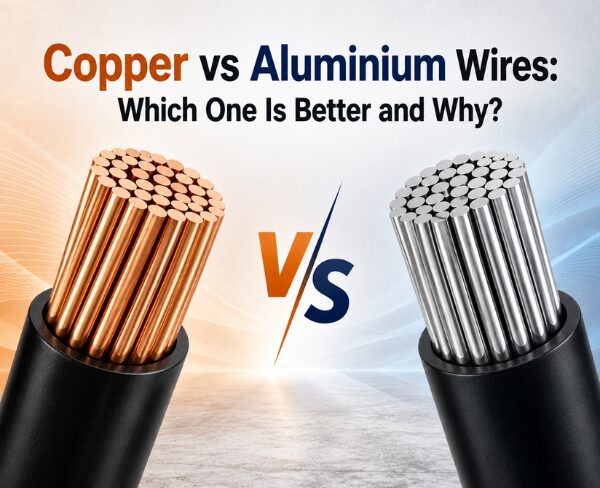
Choosing the right electrical wire is one of the most important decisions when designing or upgrading an electrical system. Whether you’re wiring a home, commercial building, factory, or industrial facility, the type of conductor you choose directly impacts safety, efficiency, durability, and long-term performance. Selecting a reliable and high-quality product from a trusted manufacturer is essential for ensuring dependable electrical performance. With advanced technology and quality-driven solutions, V-MARC offers some of the Best Cables in India and is recognized among the Top Wires in India for safe, efficient, and long-lasting electrical applications.
The two most commonly used conductor materials are copper and aluminium. While both are widely used in electrical applications, they differ significantly in terms of conductivity, strength, flexibility, cost, and maintenance requirements.
Understanding these differences can help homeowners, builders, electricians, and project managers make an informed decision. Many products from the Best cable manufacturers in India are available in both copper and aluminium variants, each designed for specific applications.
In this guide, we’ll compare copper and aluminium wires in detail and explain which option is better for different electrical installations.
Understanding Copper and Aluminium Wires
Electrical wires consist of a conductive metal core covered with insulating material. The conductor carries electrical current, while the insulation protects against electrical leakage and external damage.
The two most common conductor materials are:
- Copper
- Aluminium
Each material offers unique advantages depending on the application.
Copper Wires: Features and Benefits
Copper has been the preferred conductor for electrical wiring for decades due to its superior electrical and mechanical properties.
Advantages of Copper Wires
1. Excellent Electrical Conductivity
Copper has higher electrical conductivity than aluminium, allowing electricity to flow more efficiently with lower resistance.
Benefits include:
- Reduced power loss
- Improved energy efficiency
- Better voltage stability
- Enhanced appliance performance
2. Superior Strength
Copper is mechanically stronger than aluminium, making it more resistant to stretching, bending, and mechanical damage during installation and long-term use.
3. Better Flexibility
Copper wires are highly flexible and can be bent repeatedly without breaking, making installation easier in residential and commercial buildings.
4. Better Heat Resistance
Copper handles higher operating temperatures more effectively, reducing the likelihood of overheating under normal electrical loads.
5. Longer Service Life
Copper wiring generally offers a longer lifespan due to its durability, corrosion resistance, and mechanical stability.
Aluminium Wires: Features and Benefits
Aluminium has become a popular alternative for certain applications because of its lightweight nature and lower cost.
Advantages of Aluminium Wires
1. Lightweight
Aluminium weighs approximately one-third as much as copper.
This makes it ideal for:
- Overhead transmission lines
- Long-distance power distribution
- Large infrastructure projects
2. Lower Material Cost
Aluminium is generally less expensive than copper, making it attractive for projects with large conductor requirements.
3. Suitable for High-Voltage Transmission
Utility companies often use aluminium conductors for overhead power transmission due to their lower weight and economic advantages.
Copper vs Aluminium: Key Comparison
| Feature | Copper | Aluminium |
| Electrical Conductivity | Excellent | Good |
| Mechanical Strength | High | Moderate |
| Flexibility | Excellent | Lower |
| Corrosion Resistance | Excellent | Good (requires proper connections) |
| Weight | Heavier | Much lighter |
| Cost | Higher | Lower |
| Lifespan | Longer | Good with proper installation |
| Residential Wiring | Highly preferred | Less common |
| Industrial Applications | Widely used | Used in selected applications |
Which Wire Is Better for Homes?
For residential buildings, copper is generally the preferred choice because it offers:
- Higher conductivity
- Better durability
- Greater flexibility
- Lower maintenance
- Reliable long-term performance
Many products offered by the Best Wire and Cable manufacturers in India – V-MARC are designed to meet modern residential safety and performance requirements.
Which Wire Is Better for Industrial Applications?
The choice depends on the specific application.
Copper is commonly selected for:
- Industrial machinery
- Control panels
- Manufacturing plants
- Commercial buildings
Aluminium is commonly used for:
- Power distribution
- Utility networks
- Large-scale infrastructure
- Overhead transmission lines
Safety Considerations
Regardless of conductor material, electrical safety depends on:
- Correct cable sizing
- Professional installation
- Quality insulation
- Proper connectors
- Compliance with applicable electrical standards
- Regular inspection and maintenance
Choosing products from trusted manufacturers helps support long-term reliability.
Why Quality Matters More Than Price
Although aluminium may reduce initial costs in some applications, selecting the right conductor should be based on technical requirements rather than price alone.
High-quality cables provide:
- Improved safety
- Reliable electrical performance
- Longer service life
- Lower maintenance
- Better energy efficiency
This is why customers often evaluate products from the Best cable companies in India and the Best cable manufacturing companies in India when selecting wiring solutions.
Choosing the Right Cable Manufacturer
The performance of any electrical cable depends not only on the conductor material but also on the quality of manufacturing.
When selecting a manufacturer, consider:
- Product quality
- Manufacturing technology
- Quality testing
- Safety certifications
- Industry experience
- Customer support
Many buyers prefer products from the Top cable manufacturer in India and other established brands because of their commitment to quality and consistent performance.
Why V-MARC Is a Trusted Choice
V-MARC has built a reputation for offering a wide range of electrical wires and cables designed for residential, commercial, and industrial applications.
Recognized by many customers among the Best Wire and Cable manufacturers in India – V-MARC, the company focuses on:
- High-quality raw materials
- Advanced manufacturing technology
- Stringent quality control
- Reliable product performance
- Customer-focused innovation
Choosing a trusted brand helps ensure dependable electrical performance and long-term peace of mind.
Conclusion
Both copper and aluminium wires have important roles in modern electrical systems. Copper offers superior conductivity, strength, flexibility, and durability, making it the preferred choice for most residential and commercial wiring. Aluminium, on the other hand, provides advantages such as lower weight and cost, making it well-suited for overhead transmission and certain large-scale infrastructure projects.
Ultimately, the best choice depends on your specific application, budget, electrical load, and installation requirements.
Whether you’re building a new home, upgrading an office, or managing an industrial project, choosing products from the Best cable manufacturers in India, the Best cable companies in India, the Best cable manufacturing companies in India, and trusted brands such as V-MARC can help ensure quality, safety, and reliable performance for years to come.
Frequently Asked Questions (FAQs)
1. Which is better for home wiring—copper or aluminium?
Copper is generally preferred for residential wiring because of its higher conductivity, greater flexibility, superior durability, and reliable long-term performance.
2. Why is aluminium used in power transmission?
Aluminium is lightweight and cost-effective, making it suitable for long-distance overhead power transmission and utility infrastructure.
3. Does copper conduct electricity better than aluminium?
Yes. Copper has higher electrical conductivity, allowing more efficient current flow with lower resistance.
4. Is aluminium wiring safe?
When properly designed, installed, and maintained using appropriate connectors and standards, aluminium wiring can be used safely in suitable applications.
5. Which wire lasts longer?
Copper generally has a longer service life due to its mechanical strength, flexibility, and corrosion resistance.
6. Is copper more expensive than aluminium?
Yes. Copper usually has a higher initial cost, but its durability and efficiency may provide long-term value in many applications.
7. Which conductor is commonly used in residential buildings?
Copper is the most commonly used conductor for residential electrical installations.
8. How do I choose the right cable for my project?
Consider electrical load, installation environment, voltage, conductor material, insulation quality, safety standards, and the manufacturer’s reputation.
9. Why should I choose cables from trusted manufacturers?
Established manufacturers invest in advanced production technology, quality control, testing, and certified manufacturing processes to deliver reliable products.
10. Does the quality of manufacturing affect cable performance?
Yes. High manufacturing standards contribute to better conductivity, insulation integrity, durability, and long-term electrical reliability.


.a0c37ae14e42a8824ea3.png)