
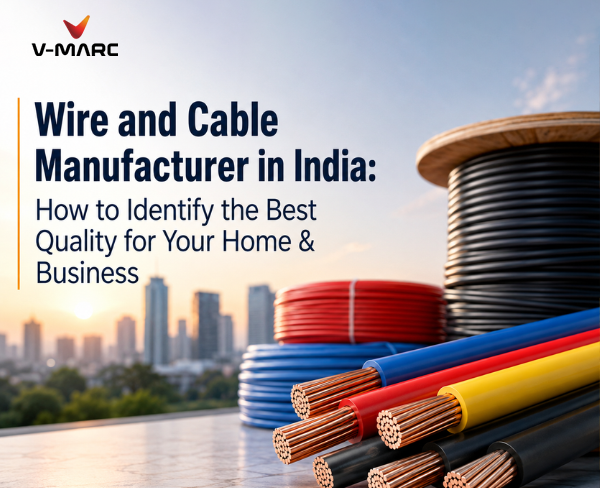
Electrical wires and cables are among the most important components of any residential, commercial, or industrial electrical system. They carry electricity throughout a property, making their quality directly connected to electrical safety, performance, and long-term reliability.
With numerous brands and products available in the market, choosing the right wire can be challenging. A product may look similar on the outside, but factors such as conductor quality, insulation, manufacturing processes, electrical capacity, and applicable standards can make a significant difference.
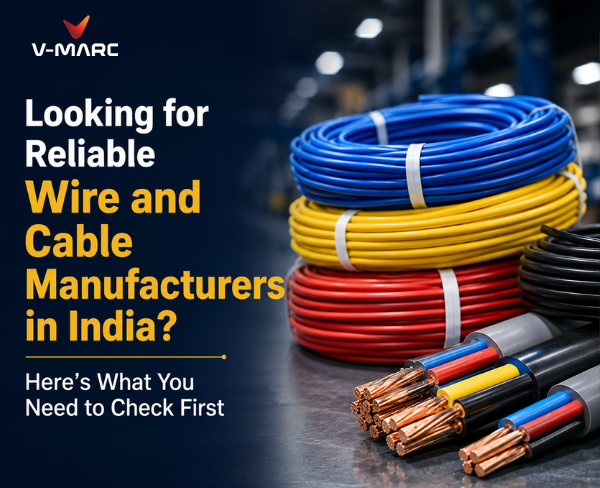
If you are searching for Top wire and cable manufacturers in India, it is important to understand how to evaluate wire and cable quality before making a purchase.
V-MARC focuses on quality-oriented wire and cable solutions designed to meet the requirements of modern residential, commercial, and industrial applications.
Why Wire and Cable Quality Matters
Electrical wiring is expected to work reliably for years. Poor-quality or incorrectly specified wiring can contribute to excessive heating, insulation deterioration, electrical losses, and safety concerns.
Choosing a quality product from a reliable manufacturer can help provide better performance and long-term value.
Whether you are constructing a home, developing a commercial property, upgrading an office, or working on an industrial project, quality should be one of the most important factors in your decision.
1. Check the Conductor Quality
The conductor is the core component that carries electrical current through a wire or cable.
Copper is commonly used in electrical wires because of its good electrical conductivity and suitability for a wide range of applications.
When comparing Wire and Cable manufacturers in India, pay attention to the conductor material and specifications provided for the product.
A quality conductor can support efficient electrical transmission and dependable performance when the wire is appropriately selected and installed.
2. Look at the Insulation Material
A high-quality conductor needs reliable insulation around it.
The insulation helps protect the conductor from environmental exposure and accidental contact while supporting the overall safety and durability of the cable.
Depending on the application, insulation may need to withstand factors such as:
- Heat
- Moisture
- Abrasion
- Mechanical stress
- Environmental conditions
- Normal operating temperatures
When evaluating the Best cable manufacturers in India, don’t look at the conductor alone. The quality and suitability of the insulation are equally important.
3. Select the Correct Wire Size
One of the most common mistakes when purchasing electrical wires is selecting a size based only on price or appearance.
The appropriate wire size depends on several factors, including:
- Electrical load
- Current-carrying requirement
- Circuit length
- Installation method
- Ambient temperature
- Application
- Applicable electrical requirements
A wire that is undersized for its intended load can experience excessive heating. On the other hand, unnecessarily large wiring can increase project costs.
Always select the appropriate size based on the electrical design and consult a qualified electrical professional when necessary.
4. Consider the Intended Application
Not every wire is designed for every application.
Residential wiring may have different requirements from commercial buildings, industrial equipment, control systems, or other specialized installations.
Before choosing a product, identify where it will be used and the conditions it will experience.
Ask questions such as:
Is it for a home or business?
Will it be installed indoors or outdoors?
What electrical load will it carry?
Will it be exposed to heat, moisture, chemicals, or mechanical stress?
Answering these questions can help narrow down the appropriate product.
5. Verify Quality Standards and Testing
Quality assurance is an important consideration when selecting electrical wires and cables.
Reliable manufacturers use controlled manufacturing processes and quality checks to maintain consistency and ensure that products meet their specified requirements.
When researching the Best wire manufacturers in India, look at the manufacturer’s quality-control practices, applicable standards, product specifications, and testing procedures.
Don’t select a wire simply because it has an attractive price. Consider the complete quality profile of the product.
6. Evaluate Durability and Long-Term Performance
Electrical wiring is usually installed for long-term use. Therefore, durability should be considered alongside initial cost.
A quality wire designed for its intended application can provide dependable performance over its expected service life when properly installed and operated.
Choosing a low-cost product that requires premature replacement may ultimately cost more.
This is why customers searching for the Best wire and cables in India should consider long-term value instead of focusing exclusively on the purchase price.
7. Consider the Manufacturer’s Reputation
The manufacturer behind a wire or cable can tell you a lot about the product’s reliability.
A quality-focused manufacturer typically invests in manufacturing infrastructure, testing, quality control, product development, and customer support.
When comparing the Top wire and cable manufacturers in India, consider factors such as:
- Manufacturing capabilities
- Product range
- Quality-control procedures
- Product testing
- Applicable standards
- Technical expertise
- Distribution network
- Customer support
- Industry experience
These factors can help you make a more informed purchasing decision.
V-MARC: A Quality-Focused Wire and Cable Brand
V-MARC is focused on providing quality-oriented wire and cable solutions for different electrical requirements.
From residential projects to commercial and industrial applications, selecting the appropriate electrical product requires attention to safety, performance, specifications, and installation conditions.
For customers researching the Best Cable and wire company in India, V-MARC represents a brand focused on delivering reliable solutions while emphasizing quality and consistent manufacturing.
The objective is simple: provide electrical products that customers can confidently consider for their wiring requirements.
How to Choose Wires for Your Home
For homeowners, electrical wiring needs to support a variety of everyday applications, including lighting, fans, kitchen appliances, air conditioners, computers, and other electrical equipment.
When selecting wires for a residential property, consider:
- Electrical load
- Appropriate conductor size
- Insulation quality
- Installation environment
- Product specifications
- Safety requirements
- Expected durability
It is also important to have electrical wiring installed by a qualified professional.
A quality product combined with correct installation can contribute to a safer and more dependable electrical system.
How to Choose Wires for Your Business
Commercial properties can have more demanding electrical requirements than residential buildings.
Offices, retail stores, warehouses, hotels, educational facilities, and industrial environments may require different types of wires and cables depending on their electrical systems and equipment.
Before purchasing wiring for a commercial project, evaluate:
- Total electrical load
- Required cable capacity
- Installation conditions
- Cable routing
- Environmental exposure
- Applicable standards
- Future electrical requirements
Working with qualified electrical engineers or contractors can help ensure that the selected products are appropriate for the project.
Price vs. Quality: What Should You Choose?
Price is naturally an important factor in any construction or electrical project. However, choosing wires solely because they are cheaper can be a poor long-term strategy.
The better approach is to compare cost against quality, performance, durability, and suitability.
A slightly higher initial investment in quality wiring can potentially provide better long-term value by reducing the likelihood of premature replacement and helping maintain reliable electrical performance.
Therefore, when comparing the Best cable company in India, don’t ask only which brand offers the lowest price.
Instead, ask:
Which manufacturer offers the right combination of quality, safety, performance, reliability, and value?
Why V-MARC Can Be a Smart Choice
When selecting an electrical wire or cable, customers need more than a product—they need confidence in its quality and suitability.
V-MARC focuses on quality-driven manufacturing and wire and cable solutions for various electrical applications.
Whether you are a homeowner, builder, contractor, electrical professional, or business owner, choosing the right product from a quality-focused manufacturer can make an important difference to your electrical installation.
If you are researching the Best cable manufacturers in India or comparing the Best wire manufacturers in India, consider product quality, specifications, manufacturing standards, testing, and long-term value before making your final decision.
Final Thoughts
Identifying the best-quality wire is not simply about comparing brands or prices. It requires understanding the conductor, insulation, wire size, application, quality standards, durability, and manufacturer’s reputation.
For homeowners and businesses, electrical safety should always remain a priority.
If you’re looking for Top wire and cable manufacturers in India, take the time to research the manufacturer and compare products based on quality and application rather than price alone.
With its focus on quality-oriented wire and cable solutions, V-MARC aims to provide dependable products for today’s residential, commercial, and industrial electrical requirements.
Frequently Asked Questions
1. How do I choose the best wire and cable manufacturer in India?
Look for a manufacturer that focuses on product quality, reliable manufacturing processes, appropriate quality standards, testing, product specifications, and customer support. The right manufacturer should also offer products suitable for your specific residential, commercial, or industrial application.
2. What should I check before buying electrical wires?
Before purchasing electrical wires, consider the conductor material, wire size, insulation quality, electrical load, installation environment, applicable standards, and intended application. It is also recommended to consult a qualified electrical professional for appropriate product selection.
3. Why is insulation quality important in electrical wires?
Insulation helps protect the conductor from environmental exposure and accidental contact. Good-quality insulation can also contribute to the durability and safety of an electrical cable when the product is correctly selected and installed.
4. How do I select the correct wire size for my home?
The appropriate wire size depends on factors such as electrical load, circuit length, installation method, ambient conditions, and application. A qualified electrician or electrical professional can help determine the appropriate size for your electrical requirements.
5. Are expensive wires always better than cheaper wires?
Not necessarily. Price alone does not determine quality. Instead, compare the wire’s specifications, conductor and insulation quality, applicable standards, manufacturing quality, durability, and suitability for your application.
6. What makes V-MARC a wire and cable brand to consider?
V-MARC focuses on quality-oriented wire and cable solutions for residential, commercial, and industrial applications. Customers should evaluate products based on their specifications, intended application, quality requirements, and applicable standards.
7. What is the difference between a wire and a cable?
Generally, a wire is a single electrical conductor, while a cable can consist of one or more conductors grouped together and protected by insulation or an outer sheath. The appropriate product depends on the specific electrical application.
8. Why should I choose a reputed wire manufacturer?
A reputable manufacturer can provide greater confidence through consistent manufacturing processes, quality control, product testing, technical specifications, and product availability. These factors can be important when selecting electrical products for long-term use.
.a0c37ae14e42a8824ea3.png)